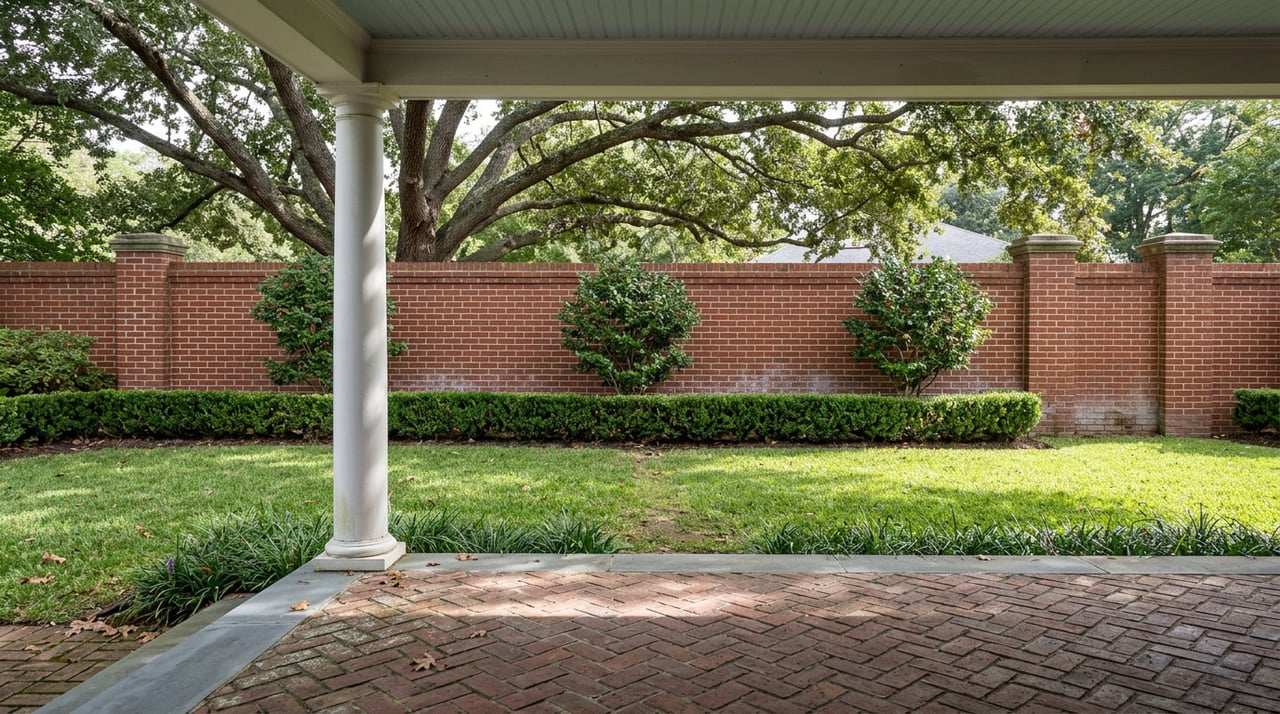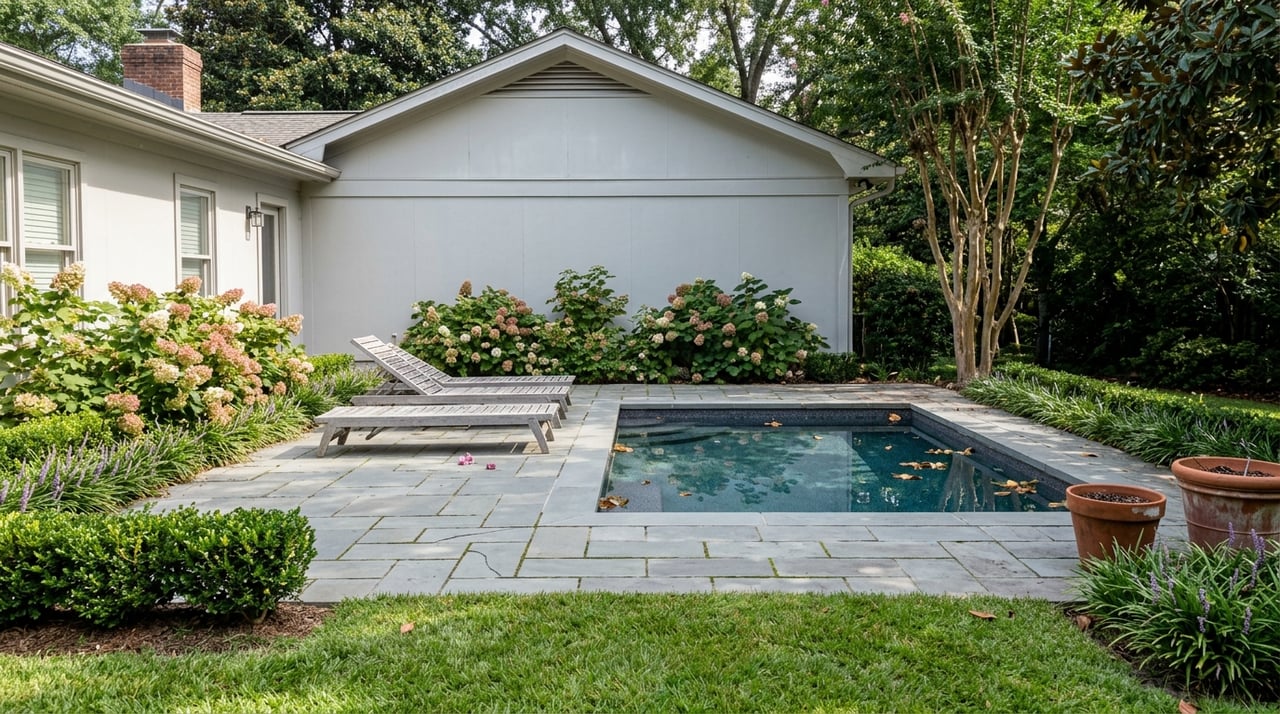
Walk down Whitlock Avenue on a Saturday morning and you'll pass the Glover-Blair-Anderson House, stuccoed brick standing since 1851, and a handful of Victorian cottages that watched Union troops burn the town in 1864 and got rebuilt anyway. These houses are why people want to live near the Square in the first place. They're also why a seller here can do everything right on paper and still get blindsided three weeks before closing.
Here's the assumption that trips people up. A seller lists a pre-1900s home near the Square, orders the termite letter, gets it back clean, and treats that piece of paper as proof the house is sound. It isn't proof of anything close to that. The termite letter and the seller disclosure form do two narrow, specific jobs, and neither one is what most sellers think it is.
What The Termite Letter Actually Checks
Georgia calls it the Official Wood Infestation Inspection Report, though most people still say "termite letter." It's issued on a state-approved form and it covers exactly five organisms: subterranean termites, drywood termites, powder post beetles, wood-boring beetles, and wood-decaying fungus. That's the entire scope. It says nothing about wiring, plumbing, roofing, or foundation movement, and the state's own fact sheet is explicit that the report is not a structural report and carries no warranty that the organisms are absent.
The inspection only covers what's visible and accessible on the day someone walks through. If a crawlspace under an 1880s addition is blocked by storage or a finished wall hides old damage, none of that shows up. A clean letter means no one saw evidence of those five organisms on that one visit. It does not mean the house is free of them, and it does not mean anything else is fine.
There's a detail worth clarifying because pest control companies describe it two different ways. The report itself carries a 90-day guarantee, meaning if one of those five organisms turns up within 90 days of the report being signed, the company that issued it has to treat it at no charge. Separately, individual companies and some lenders want the report ordered close to the closing date, often within 30 days, so the findings reflect current conditions rather than a snapshot from months earlier. Those are two different clocks measuring two different things, and conflating them is how sellers end up ordering the letter too early and having to pay for a second one.
Here's a quick side-by-side of what the letter is actually doing, since the name makes it sound bigger than it is.
| What the termite letter covers | What it doesn't cover |
|---|---|
| Visible evidence of 5 wood-destroying organisms | Foundation cracks or settlement |
| Conditions conducive to infestation (wood-to-soil contact, moisture) | Electrical systems, including knob-and-tube wiring |
| Whether an existing termite bond is transferable | Asbestos, lead paint, or mold |
| 90-day guarantee against reinfestation by those 5 organisms | Anything hidden behind finished walls or blocked crawlspace access |
The Disclosure Form Sellers Assume Is Mandatory Isn't
Georgia is a caveat emptor state. There's no state statute that forces a seller to fill out a property condition disclosure form, and most agents describe the practical rule the same way, that a buyer has to ask the right questions and a seller has to answer them honestly. The Georgia Association of Realtors publishes two versions, the Seller's Property Disclosure Statement (F301) and the shorter Seller's Disclosure of Latent Material Defects (F302), and most sellers complete one of them anyway because it protects them and speeds up the deal. But completing it is a custom, not a legal obligation, except for one thing that is legally required regardless of anything else: if any part of the home was built before 1978, federal law requires the lead-based paint disclosure and gives buyers a window to test for it. Given how much of the housing stock near the Square predates 1950, this one applies more often here than in newer Cobb County subdivisions.
The distinction matters because it changes what silence means. Skipping the voluntary disclosure form doesn't erase the underlying duty. A seller who knows about a cracked foundation footing or a wiring issue and says nothing when asked directly is exposed to a fraud claim later. The termite letter and the disclosure form were never designed to cover the same ground, and treating a clean termite letter as if it satisfies the disclosure conversation is the gap that causes problems during due diligence.
What Local Inspectors Actually Find In These Houses
Inspectors who work this specific stretch of Cobb County describe a consistent pattern in homes built before the 1950s, and it has nothing to do with termites. Georgia's clay soil expands and contracts with moisture swings, and that movement shows up as cracked drywall, sticking doors, and uneven floors long before it becomes a structural emergency. Older wiring, including knob-and-tube systems in homes that predate modern code, turns up regularly, along with asbestos in insulation or duct wrap and lead paint in any finish applied before 1978. Crawlspace moisture is its own recurring theme, tied to grading and ventilation that made sense a century ago and doesn't hold up under today's expectations.
None of that is unique to Marietta. What is specific to this market is the concentration of it within a few blocks of the Square, in houses like the Oakton House on Kennesaw Avenue, built in 1838, or Brumby Hall, built in 1851, both still standing as reminders of how much of this neighborhood's housing stock is genuinely antebellum rather than just old. A termite letter on one of these properties tells a buyer almost nothing about the wiring behind the plaster or the grading around a foundation that's been settling since before the Civil War.
The Certificate Nobody Mentions Until Repairs Are Already Scheduled
There's a second wrinkle specific to this neighborhood that catches sellers off guard, and it has nothing to do with pests or paperwork. Several pockets around the Square, including the Kennesaw Avenue Historic District designated in 2013 and the Church-Cherokee Streets Historic District adopted in 2016, are locally designated historic districts, not just listed on the National Register. In a locally designated district, exterior work needs a Certificate of Appropriateness from the Historic Preservation Commission before it starts, whether that's a new roof, replacement windows, or repainting trim in a different color.
A seller who gets a pre-listing inspection back, sees roof wear flagged, and books a contractor for the following week can lose real time here if the property sits inside one of these boundaries and nobody checked first. The fix isn't complicated, it's a call to the city before scheduling, but it's the kind of step that only becomes obvious after someone has already lost two weeks waiting on a review they didn't know they needed.
What This Actually Means If You're Listing Near The Square
Order the termite letter close to your closing date rather than the moment you list, since the 90-day guarantee protects you but a stale report can still trigger a lender request for a fresh one. Get a pre-listing inspection early enough that you have time to address what it finds, not so you can hide it, but so the disclosure conversation happens on your terms instead of a buyer's during their due diligence period. If your street falls inside one of the locally designated districts, confirm whether planned exterior repairs need a Certificate of Appropriateness before you put a contractor on the calendar. And treat the seller disclosure form as an opportunity rather than a formality. Georgia doesn't force you to fill it out, but a clear, complete one is usually what keeps a deal on pre-1900s housing stock from stalling once a buyer's inspector starts finding things the termite letter was never built to catch.
None of this replaces a conversation with a real estate attorney about your specific closing timeline or a licensed pest control company about your specific report. What it does is make sure you're not walking into that conversation thinking the termite letter already answered questions it was never designed to ask.
If you're weighing a sale near the Square and want to know what a buyer's inspector is likely to flag on your specific property before it becomes a surprise during due diligence, Anet Granger can walk the house with you and help you build a timeline that accounts for all of it, not just the five organisms on the state form.